1
2
3
4
5
6
7
8
9
10
11
12
13
14
15
16
17
18
19
20
21
22
23
24
25
26
27
28
29
30
31
32
33
34
35
36
37
38
39
40
41
42
43
44
45
46
47
48
49
50
51
52
53
54
55
56
57
58
59
60
61
62
63
64
65
66
|
import numpy as np
import matplotlib.pyplot as plt
from PIL import Image
import requests
from io import BytesIO
import os
def download_load_image():
if not os.path.exists("lena.jpg"):
url = "https://raw.githubusercontent.com/opencv/opencv/master/samples/data/lena.jpg"
response = requests.get(url)
img = Image.open(BytesIO(response.content))
img.save("lena.jpg")
else:
img = Image.open("lena.jpg")
return np.array(img)
def rgb_to_grayscale(rgb_img):
return np.dot(rgb_img[...,:3], [0.299, 0.587, 0.114])
def svd_compress(image, k):
U, s, Vt = np.linalg.svd(image, full_matrices=False)
return U[:,:k] @ np.diag(s[:k]) @ Vt[:k,:]
lena_rgb = download_load_image()
lena_gray = rgb_to_grayscale(lena_rgb) / 255.0
if lena_gray.shape != (512, 512):
from PIL import Image
img_pil = Image.fromarray((lena_gray * 255).astype(np.uint8))
lena_gray = np.array(img_pil.resize((512, 512))) / 255.0
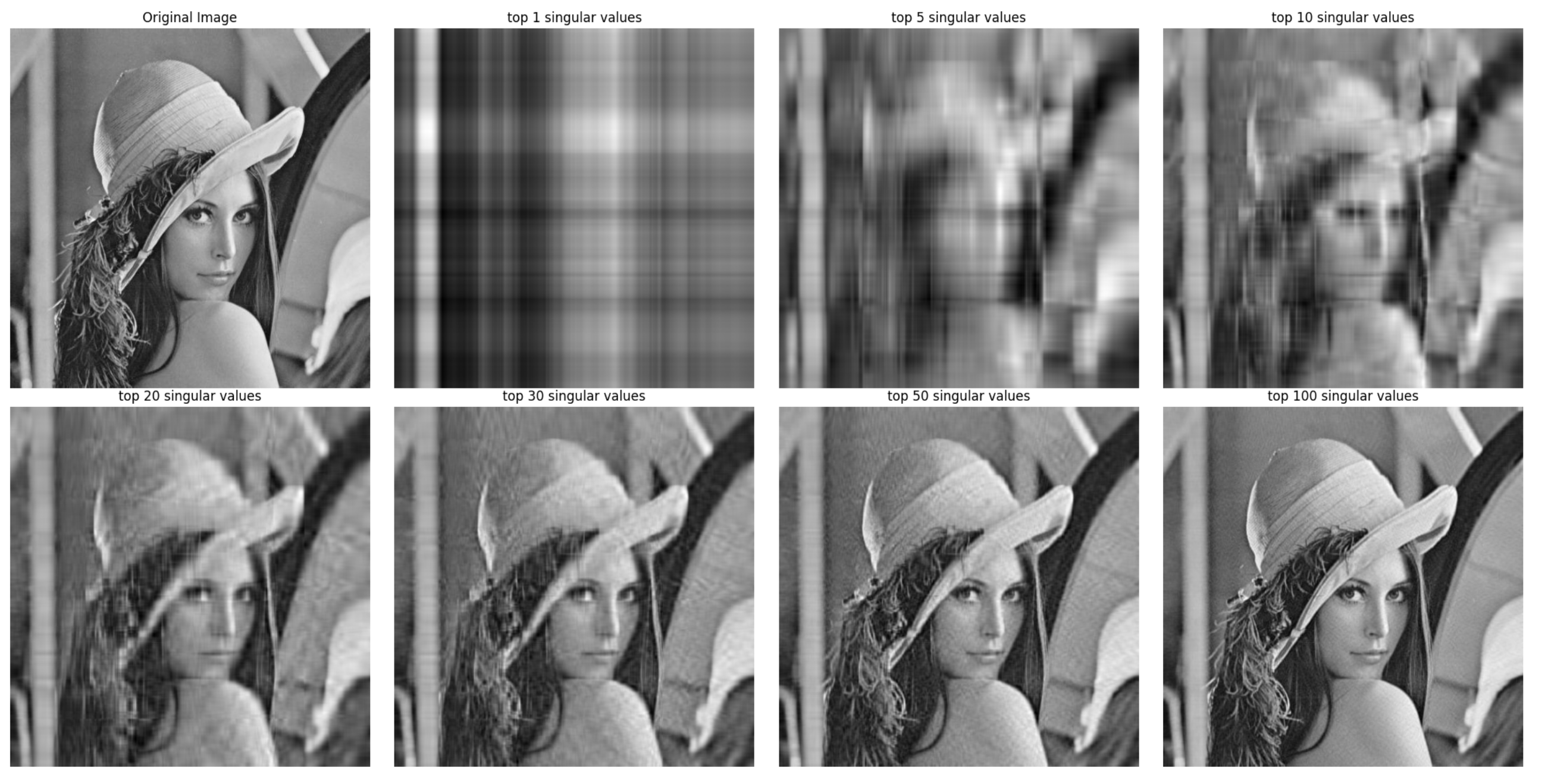
plt.figure(figsize=(20, 10))
plt.subplot(2, 4, 1)
plt.imshow(lena_gray, cmap='gray')
plt.title("Original Image")
plt.axis('off')
k_values = [1, 5, 10, 20, 30, 50, 100]
for i, k in enumerate(k_values):
compressed_img = svd_compress(lena_gray, k)
position = i + 2
plt.subplot(2, 4, position)
plt.imshow(compressed_img, cmap='gray')
plt.title(f"top {k} singular values", fontsize=12)
plt.axis('off')
plt.tight_layout()
plt.show()
|